
Rainwater Harvesting: 6 Things to Know Before You Install
If you own, manage, or live in a property anywhere near Mumbai, Thane, or Navi Mumbai, there’s a decent chance rainwater harvesting isn’t actually optional for your building anymore — it’s a legal requirement you may not know you’re already supposed to have met. And even where it isn’t mandatory, it’s become one of the more straightforward ways to cut dependence on municipal supply and groundwater, right when both are under more pressure than usual.
Before you install anything, though, there are six things genuinely worth understanding first — what the system actually does, what it costs, whether it’s legally required for your property, and a few things that trip people up after installation. Here they are, in order.
What Rainwater Harvesting Actually Involves
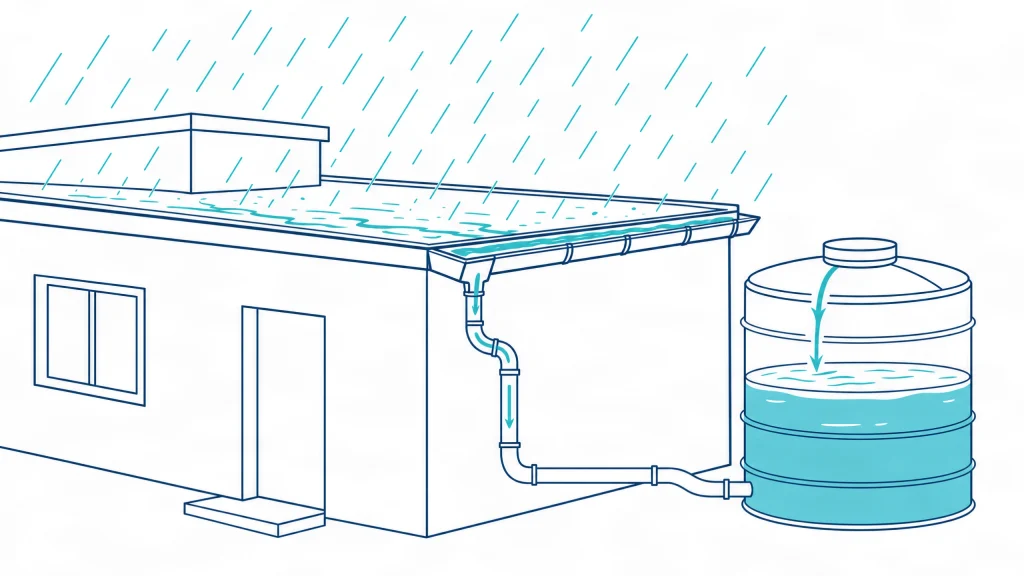
Start with the basics. Rainwater harvesting means catching rain — off a roof, usually, sometimes another hard surface — instead of watching it run straight into a drain and disappear. What happens to that water next depends on the system. Store it for direct use later. Or send it back underground, where it recharges groundwater and feeds the borewells drawing from it.
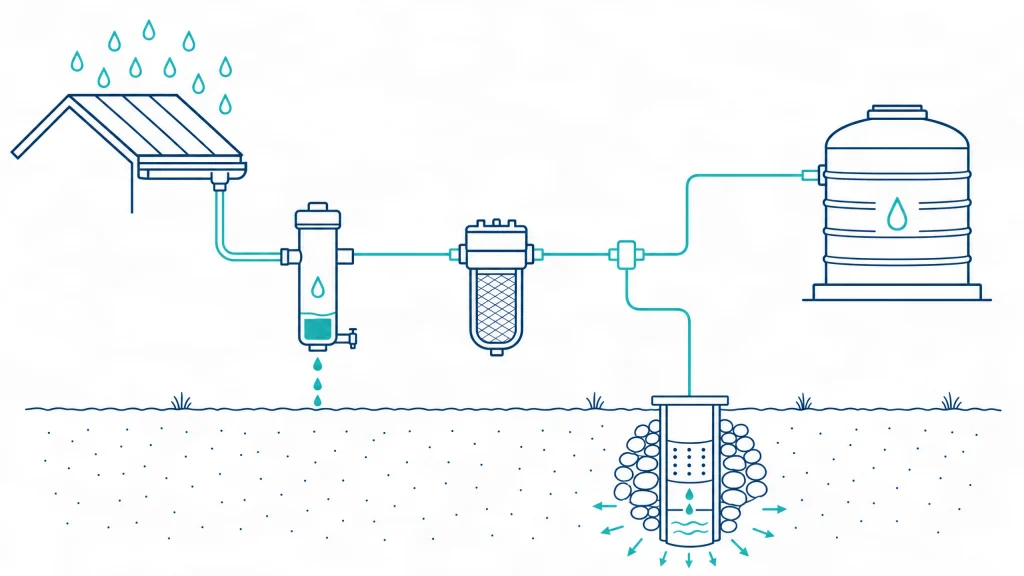
Two broad approaches exist. Storage-based rainwater harvesting captures water in tanks for later use — flushing, gardening, cleaning, sometimes even drinking water after proper filtration. Recharge-based rainwater harvesting, more common on Indian residential and commercial properties, directs filtered rainwater into percolation pits, trenches, or directly into a recharge well, topping up the groundwater table and the borewells that draw from it.
Most properties in Maharashtra end up using some combination of both — a smaller storage tank for immediate reuse, and a larger share of the collected water routed to recharge.
How a rooftop rainwater harvesting system actually works, step by step: rain falls on the roof, flows into gutters or collection channels, and heads toward a downpipe. Before it goes anywhere useful, it passes through a first-flush diverter — a simple device that sends the initial, dirtiest flow of water away from the system entirely, so only the cleaner water that follows gets collected. From there, it runs through a filter, usually mesh screens plus sand or gravel, before heading into a storage tank or a recharge pit, depending on how the system was designed. A well-built system also includes an overflow mechanism, so excess water during heavy rainfall has somewhere to go.
The Real Benefits — Not Just the Obvious One
Most people assume the only rainwater harvesting benefit is “you save water.” That’s true, but it’s not the whole picture, and a few of the less obvious benefits are often the more important ones.
Reduced dependence on municipal and groundwater supply. This is the most direct benefit — every litre captured and reused is a litre you’re not drawing from a borewell or municipal connection, which matters a lot more during a dry season than during a normal monsoon year.
Groundwater table recovery. Recharge-based systems specifically help restore groundwater levels that years of over-extraction have depleted across much of Maharashtra. This isn’t just an individual-property benefit — it affects every borewell drawing from the same aquifer in the area.
For a property that actually uses a meaningful amount of water, reused rainwater adds up. Less drawn from paid municipal supply, month after month, and it’s not a small difference once you track it over a full year.
Here’s one most people don’t connect to their own property: storm drains are already overloaded in a lot of these areas. Capture and direct rainwater properly, instead of letting all of it run straight off a roof into the street, and you’re taking some of that pressure off the drainage system during heavy rain. Small individual effect. Adds up across a neighborhood.
Regulatory compliance. For a growing number of properties, this isn’t optional — it’s the difference between getting an occupation certificate and not, which is really its own point, covered next.
Better water quality in some cases. Properly filtered rainwater is naturally soft water, low in the dissolved salts and minerals that can be a problem with some groundwater sources in coastal Maharashtra specifically.

Whether It’s Actually Mandatory for Your Property
This is the part most property owners and housing societies genuinely don’t know the current answer to, because the rules have changed more than once.
Mumbai (BMC). The Brihanmumbai Municipal Corporation was the first municipal body in Maharashtra to make rainwater harvesting mandatory for new buildings, back in 2002, originally for plots over 1,000 square metres. The threshold has tightened since. Under the current Development Control and Promotion Regulations (DCPR-2034), effective from May 2019, rainwater harvesting is mandatory for any developed area of 500 square metres or more — a significantly lower bar than the original rule.
Navi Mumbai (NMMC). The Navi Mumbai Municipal Corporation requires rainwater harvesting for buildings with a plot area of 300 square metres and above, and an occupancy certificate generally isn’t supposed to be issued without a working system in place.
Maharashtra, more broadly. The Maharashtra State Water Policy, 2019 mandates rainwater conservation across urban areas statewide, which is the broader policy framework that individual municipal corporations — BMC, NMMC, and others — have built their specific building-level requirements on top of.
Here’s the part worth being honest about: enforcement has historically been inconsistent. Multiple reports over the years have found a meaningful share of buildings that technically qualify for the mandate never actually installed a working system, or installed one that stopped functioning without anyone noticing. That matters for two reasons — it’s a compliance risk if your property is ever audited or if you’re applying for FSI changes, and it’s a missed opportunity on the actual water-saving benefit, since an unmaintained rainwater harvesting system on paper does nothing for your real water supply.

What It Actually Costs
There’s no single number for rainwater harvesting cost. Roof area matters. Storage capacity matters. Whether you’re going storage-based, recharge-based, or both — that changes the number too.
Bigger roof means more water to handle, which means a bigger system, plain and simple. Then there’s the storage-versus-recharge question — lean more on storage and the tank cost goes up, lean more on recharge and you’re spending more on the pit or well instead. Filtration quality is its own line item. Spend more upfront on a proper first-flush diverter and good filter media, and maintenance headaches drop noticeably down the line — that trade-off’s worth knowing before you cut corners there to save money early. And soil type plays a bigger role than people expect. Some ground needs a deeper, more elaborate recharge pit just to actually function. Other soil barely needs one at all.
A smaller residential property with a modest roof area and a simple recharge-focused system sits at the lower end of the cost range. A larger housing society or commercial building, needing a bigger storage component alongside recharge infrastructure, costs meaningfully more — but also captures and saves proportionally more water, so the cost-to-benefit ratio doesn’t necessarily get worse at scale.
The honest answer, the same one we’d give for any water infrastructure: getting an accurate number requires an actual site assessment — roof area, existing plumbing, available space for tanks or pits — rather than a generic estimate that doesn’t account for your specific property.
What Housing Societies Specifically Need to Know
Housing societies are a particularly important case, since a large share of Maharashtra’s rainwater harvesting mandate falls on exactly this category of property.
A few things matter specifically here: the system needs to be sized for the collective roof area of the building or complex, not a single unit’s usage. Maintenance responsibility needs a clear owner within the managing committee, since an unmaintained system — clogged filters, blocked first-flush diverters — stops functioning quietly, and nobody notices until a water shortage makes the gap obvious. And BMC’s health department specifically looks at mosquito-breeding prevention in stored rainwater, so proper covering and maintenance isn’t just about water capture, it’s a public health requirement too.

Societies that get this right generally treat their rainwater harvesting system as part of the regular maintenance schedule — the same way lift servicing or fire safety checks get scheduled — rather than a one-time installation nobody revisits.
How to Make Sure It Actually Works Long-Term
This is the thing almost nobody thinks about before installing rainwater harvesting, and it’s arguably the most important of all six points.
A system that’s undersized for the actual roof area, or built without proper first-flush diversion and filtration, tends to underperform quietly rather than fail obviously — which is exactly why so many mandated systems across Mumbai and Navi Mumbai exist on paper without doing much in practice. Getting it right starts before installation, not during it. Someone actually needs to assess the roof area and catchment potential first. Figure out the right storage-to-recharge balance for that specific property, not a generic split. And build in real filtration plus an overflow mechanism from day one — those aren’t extras you bolt on later if there’s budget left.
Then comes the part everyone forgets: maintaining it. This isn’t a system you install once and walk away from. Filters get dirty and need cleaning. First-flush diverters need a check before every monsoon season, not just the first one. Recharge pits silt up over time — somebody needs to actually look at them occasionally. Skip all that, and you’ve basically built an expensive compliance checkbox. Do it properly, and you’ve got a system that actually does what it’s supposed to.
Rainwater Harvesting in Thane, Dombivli, and Across Maharashtra
This is where Natural Springs Water Solution comes in. We design and install rainwater harvesting systems — both storage-based and recharge-based, sized around the actual roof area and water needs of the property, not a generic template.
We’re based in Dombivli East, in the Thane district, which means direct, local site assessment for rainwater harvesting across Dombivli, Kalyan, Thane, Navi Mumbai, and greater Mumbai — covering both the BMC and NMMC requirements accurately for whichever jurisdiction your property falls under. We also support rainwater harvesting projects further out across Maharashtra and beyond.
If your property already has a rainwater harvesting system that’s stopped functioning — a common situation given how inconsistently these get maintained — we also handle assessment and repair, not just new installation.
Frequently Asked Questions
Is rainwater harvesting mandatory in Mumbai?
Yes. Under BMC’s current DCPR-2034 regulations, effective since May 2019, rainwater harvesting is mandatory for any developed area of 500 square metres or more, down from the original 1,000 square metre threshold set in 2002.
Is rainwater harvesting mandatory in Navi Mumbai?
Yes, under NMMC rules, rainwater harvesting is required for buildings with a plot area of 300 square metres or above, and occupancy certificates are generally not supposed to be issued without a working system in place.
What’s the difference between storage-based and recharge-based rainwater harvesting?
Tanks. That’s storage-based, basically. Rain goes in, you use it later — flushing, gardening, whatever needs it. Recharge-based works differently. No tank. The water goes straight into the ground through a pit or a well, and that tops up the groundwater instead of sitting around in storage. Most places don’t actually choose. They end up doing both.
How much does a rainwater harvesting system actually cost?
Honestly, it depends — roof area, how much storage you want, whether you’re doing storage, recharge, or both. There’s no real way to give an accurate number without someone actually looking at the site first. Generic estimates don’t mean much here.
Can an existing but non-functional rainwater harvesting system be repaired instead of rebuilt?
Usually, yes. Clogged filters, a damaged first-flush diverter, a recharge pit that’s silted up — none of that typically means starting over. Most of the time, it just needs a proper assessment and the right fix, not a full rebuild.
If you want to find out whether your property meets the current rainwater harvesting requirement, or want an existing system assessed and repaired, get in touch with our team — we’ll look at your actual roof area and site before recommending anything.