Water Scarcity in India: Why the Next 6 Months Matter
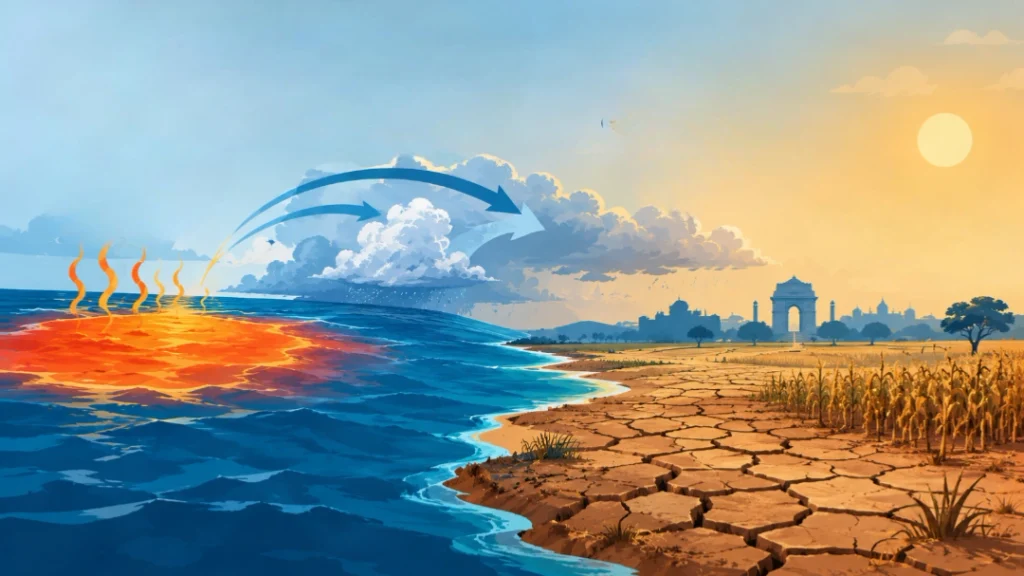
Something’s forming in the Pacific right now, thousands of kilometres from India, and it’s about to make the next six months harder than usual for water availability here. El Nino India impacts are already shaping up, and the pattern’s strengthening fast. WMO’s latest numbers put the odds of it lasting through February 2027 at close to 100%. Peak intensity is still ahead — forecasters are calling it a “very strong” event, which is about as confident as WMO ever gets with this kind of language. Some outlets have started calling it a Super El Nino. That’s not WMO’s own term, worth saying plainly, but the intensity behind it is real either way.
What does that actually mean for you? Hotter temperatures. More drought. Water supply getting squeezed right when everyone needs it most. We’ve seen this exact pattern play out before, a couple of times in the last decade, and it wasn’t subtle either time. So don’t ask whether this will affect your water supply. Start figuring out what you’re doing about it.
What El Nino Actually Does to India’s Water Supply
Here’s the chain, roughly. Pacific Ocean gets warmer than usual — central and eastern parts specifically. That heat changes how wind and pressure move, and those wind and pressure patterns happen to be what drives India’s monsoon every year. Mess with the drivers, the monsoon gets weaker. Less rain falls overall, and what does fall comes down unevenly — short, heavy bursts instead of a steady spread through the season. Reservoirs don’t love that kind of rainfall, by the way. They’re built for steady inflow, not sudden dumps followed by nothing.
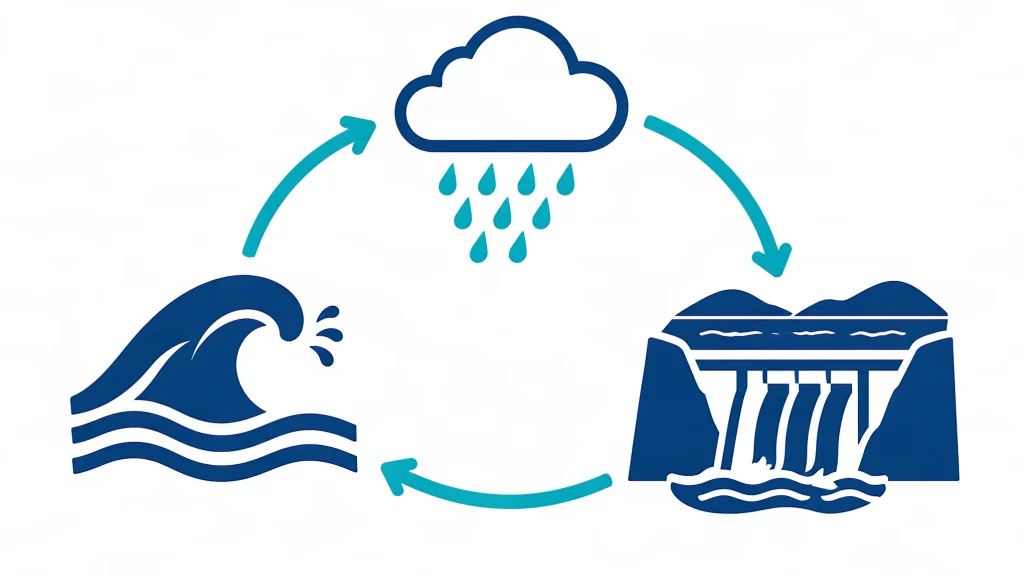
So less rain means less water going into reservoirs, rivers, and the ground itself. A dry winter on top of a weak monsoon, then an intense summer on top of that — that combination is basically a recipe. Cities feel it. Industry feels it. Farmers feel it at the same time, usually worse. Nobody gets to sit this one out.
What Happened During Past El Nino Years in India
Worth looking back, because it tells you roughly what to expect this time.
2015-16 was one of the strongest El Ninos on record back then. Monsoons failed two years running across large parts of the country. Over 250 districts ended up officially declared drought zones. Reservoir levels across the Deccan plateau and Maharashtra took a real hit.
2018-19 was milder. Still disrupted monsoon distribution badly, just unevenly — some regions got close to normal rainfall, others, parts of Maharashtra included, fell well short. That shortfall is part of what set up Chennai’s 2019 crisis, when the city’s main reservoirs came within a stretch of running dry completely.
This time’s different on one specific count: intensity. WMO isn’t describing a moderate or borderline event. They’re putting it among the strongest since records started in 1950. If moderate El Ninos already strained reservoirs and groundwater the way 2015-16 and 2018-19 did, a stronger one gives no real reason to expect things go easier this round. Probably the opposite. The pattern holds: every serious El Nino year on record has meant worse water scarcity in India than the one before it, not better. Each of these moments became part of the broader water crisis India has faced roughly every five to seven years, tied to the same El Nino cycle.
Which Areas Are Already Vulnerable
Water scarcity in India doesn’t hit everywhere equally. Maharashtra — Thane district specifically, where Natural Springs Water Solution is actually based — carries real structural risk heading into this.
Dombivli, Kalyan, and the wider Thane district run on a mix of municipal supply from regional dams plus a lot of groundwater through borewells. Older residential societies lean on this especially, along with smaller industrial units built before municipal pipelines reached them. That mix is exactly the setup that breaks first in a weak monsoon. Municipal authorities start rationing to stretch reservoir levels. Borewells people treat as backup draw down faster than normal, because suddenly everyone’s leaning on them at once.
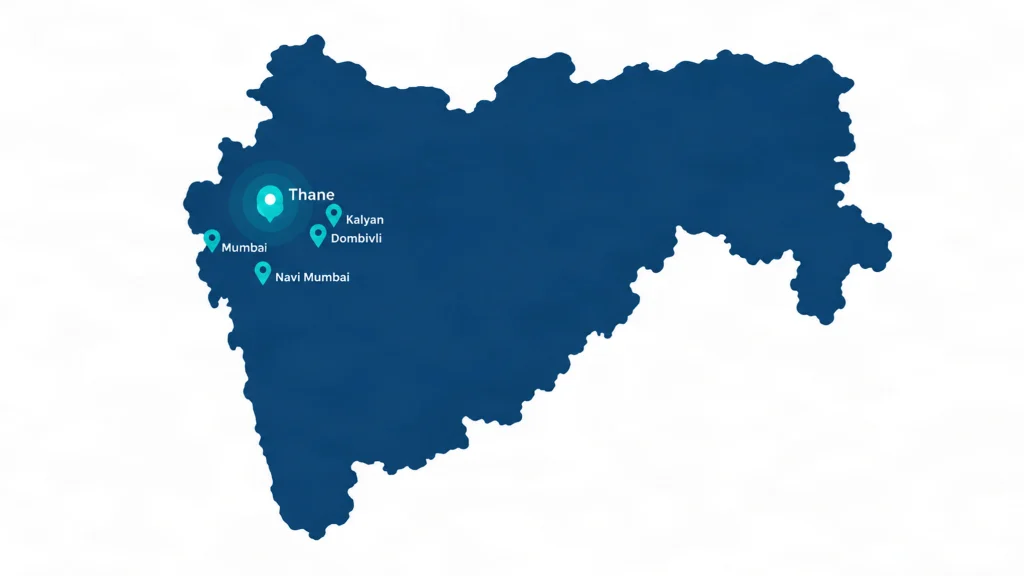
Mumbai water crisis conditions tend to start the same way. Reservoir levels drop below where they should be heading into summer — Tansa, Vihar, Bhatsa, the same lakes Thane district also draws from. That’s the thing people miss: Mumbai and Thane aren’t really separate water systems. They’re pulling from the same source. Add in a dense population and not many backup reservoirs to lean on, and you’ve got a region-wide exposure, not a Mumbai-only problem. When monsoon rainfall underperforms, Dombivli feels it on roughly the same timeline Mumbai does.
Navi Mumbai isn’t insulated by its newer infrastructure, either. Its municipal supply traces back to that same regional reservoir network. A weak monsoon catches up with Navi Mumbai on roughly the same timeline as Thane and Mumbai proper.
Zoom out past the immediate region, and water scarcity in India follows a familiar pattern across Maharashtra generally — Pune, Nashik, several inland districts have all seen real drought stress in past El Nino years. The state leans hard on reservoir storage, and that storage depends entirely on one reliable monsoon to refill. Miss that, and you’re not just short for one season. You start the following summer with reservoirs already running low. That’s how a single weak monsoon turns into a water crisis spanning multiple years.
Why This Isn’t Just a Municipal Problem
Easy to assume water scarcity means municipal supply cuts, and everyone else — industry, commercial property — stays untouched. Rarely plays out that way.
Borewell levels fall across entire regions during a serious dry spell. Not selectively at residential buildings. A commercial complex relying partly on groundwater sees the same decline the apartment block next door does. Municipal cuts, when they happen, generally hit every connected consumer in an area — industrial and residential together — unless a facility already built in its own buffer beforehand.
That’s the real issue. By the time a crisis becomes visible — tankers lined up, pressure dropping, a borewell finally running dry — it’s too late to start building a solution. The facilities and properties that make it through an intense dry season with the least disruption? Almost always the ones that planned months out. Not the ones scrambling once the shortage already hit.This is the version of water scarcity in India that rarely makes headlines — it plays out quietly, building by building, long before it becomes a city-wide story.
Water Scarcity Solutions Worth Planning Now
No single fix solves water scarcity in India — not completely, anyway. What works depends on whether you’re running a residential society, a commercial building, or an industrial facility, and on what your current water sources actually look like. A few categories come up again and again as the most effective preparation, though.
Sewage Treatment Plants (STP) let a property treat and reuse its own wastewater on-site. Flushing, gardening, cooling systems — all of that can run on treated wastewater instead of drawing fresh municipal or groundwater supply. For any property with real daily consumption, this alone cuts a meaningful chunk of external dependence.
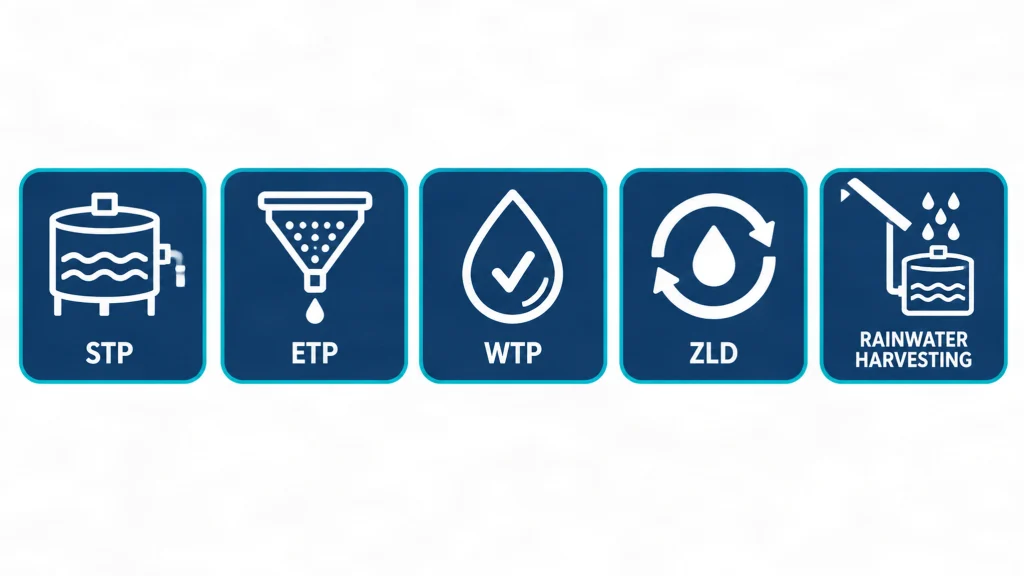
Industrial sites have a different problem — their wastewater can’t just go back into use, or get discharged, without treatment first. That’s where an ETP comes in. And it’s not only about meeting the regulatory requirement, though that’s reason enough on its own. A properly built ETP actually recovers water that would’ve gone to waste otherwise.
Water Treatment Plants (WTP) become more important during stress periods, not less — groundwater and municipal supply quality tends to shift when sources are strained. Sediment, salinity, contamination, all more likely to spike. Proper treatment matters more exactly when things are getting harder, which is counterintuitive but true.
ZLD takes this further still. We’re talking up to 95% of wastewater recovered and reused, with basically nothing discharged. For a facility already working under tight water allocation, or sitting somewhere genuinely water-stressed, that’s not a nice-to-have feature. That’s the difference between staying operational through a dry season and not.
Rainwater Harvesting is usually the most immediately actionable step for anyone dealing with water scarcity in India right now. Install it ahead of monsoon, and it captures water that would otherwise just run off — storing it for exactly the dry months when every other source is strained hardest.
None of these fix anything if you install them the week a crisis hits. That’s the whole point of the planning window. A rainwater harvesting system or an STP built before summer actually helps during a dry spell. The same system still sitting in the “we should probably look into this” stage once borewells are already running low? Not protecting anyone.
What Preparing Now Actually Looks Like
Getting ahead of water scarcity in India isn’t complicated, but it does take starting before the dry season, not during it. If you’re running a residential society or a commercial property, start with the basics. How much of your water is borewell, how much is municipal — most people honestly don’t know the split until they check. From there, figure out if an STP makes sense for your daily usage, enough to actually justify the cost. Rainwater harvesting’s the other piece, and timing matters here more than people realize. Get it installed before monsoon arrives, not during it, or you’re not capturing anything that season — just holding a plan you meant to act on.

Industrial facilities have more moving parts. Start by checking if your current ETP can handle extra reuse demand once fresh water gets harder to access. Then there’s the bigger question — does a ZLD system actually make sense given how exposed your facility is, and what the regulatory situation looks like for your industry specifically? One more thing, easy to put off: groundwater extraction approvals and NOC status. Get ahead of that early. Permitting delays are bad on a normal day. They’re brutal when half the region’s filing for the same approvals at once because everyone’s dealing with the same shortage.
There’s a cost angle worth being direct about too. Preparing ahead — rainwater harvesting, STP upgrades, NOC approvals — is a planned expense with a known timeline. Responding after a shortage hits almost never is. Emergency tanker water, production slowdowns from insufficient process water, rushed permitting while every other facility in the region is chasing the same approvals at once — all of that tends to cost more than preparation would’ve, while delivering a lot less certainty the problem actually gets solved in time. The math leans toward preparing early, and that’s before even counting the operational disruption a shortage causes on its own.
Water Scarcity Solutions in Thane, Dombivli, and Across Maharashtra
This is where Natural Springs Water Solution comes in. We design and build STP, ETP, WTP, ZLD, and rainwater harvesting systems specifically to help properties and facilities get ahead of water scarcity, not react to it after the fact — whether that’s a borewell running low, municipal supply tightening, or both hitting at once.
We’re based in Dombivli East, Thane district, which means fast local site assessment across Dombivli, Kalyan, Thane, Navi Mumbai, and greater Mumbai. We also install and support systems further out — Ahmedabad, Chennai, Hyderabad, New Delhi, Vadodara. Same approach everywhere: look at the actual site, the actual water sources, the actual consumption pattern. Design from that. Not from a template.
The Months Ahead Are About More Than Heat
The coming months aren’t just a heat story. They’re a water management and reuse story, and the two connect but aren’t the same thing. Heat gets the headlines. What actually decides whether a property or facility gets through the dry season smoothly is whether water use, reuse, and storage got planned for in advance.
Water scarcity in India isn’t going away after this El Nino cycle ends, either. Start now, so the shortage doesn’t end up being your problem come summer.
Frequently Asked Questions
How exactly does El Nino lead to water scarcity in India?
It’s a climate pattern — Pacific Ocean water gets warmer than usual, and that ends up weakening India’s monsoon. Less monsoon rain means reservoirs and groundwater don’t recharge properly. That shortfall is a big part of what drives water scarcity in India once the dry season actually arrives. It’s a cycle that’s repeated often enough in India to be predictable, even if the exact timing varies.
Which parts of India get hit hardest when El Nino years come around?
Thane district first — Dombivli, Kalyan, that whole belt. Mumbai and Navi Mumbai right behind it, and honestly most of Maharashtra isn’t far off either. The reason’s pretty simple: these places share the same reservoirs, and they all lean heavily on groundwater. One dry spell, and it doesn’t pick favourites.
If you’re managing a residential property, what should you actually install first?
For most residential societies and commercial buildings, two things stand out: rainwater harvesting, and an STP for treating and reusing wastewater on-site. Neither is complicated to justify — both reduce how much you need to pull from outside sources.
Can a Zero Liquid Discharge (ZLD) system help during a water crisis?
It can, particularly if you’re running an industrial facility. ZLD recovers up to 95% of wastewater for reuse instead of letting it go to waste. That’s a real cut in how much fresh water your facility actually needs, even when outside supply gets tight.
How far in advance should I prepare for a potential water shortage?
Give it months, not weeks. STP and rainwater harvesting systems don’t go in overnight — there’s design work, approvals, actual construction. Wait until the shortage is staring you in the face, and honestly, you’ve already missed your window for that season.
If you want to figure out what water scarcity solutions actually make sense for your property or facility before summer, get in touch with our team — we’ll look at your real site and water sources before recommending anything, because the right fix for water scarcity in India always depends on the specific property, not a general answer.