Zero Liquid Discharge: What It Actually Means for Your Facility
Somebody mentioned Zero Liquid Discharge to you — probably in a compliance meeting, or buried in a regulatory notice — and nobody actually explained what it means beyond “stop discharging wastewater.” That happens a lot. Consultants bring up ZLD when the current ETP setup isn’t going to cut it anymore, and then move straight on to timelines and budgets before anyone covers the basics.
So let’s cover the basics. What it actually is, how the system works, who genuinely needs one, what it costs, and how it’s different from the ETP compliance you’re probably already dealing with.
Interactive 3D model of a Sewage Treatment Plant: drag to rotate, scroll to zoom, click any stage to see what it does.
What Zero Liquid Discharge Actually Means
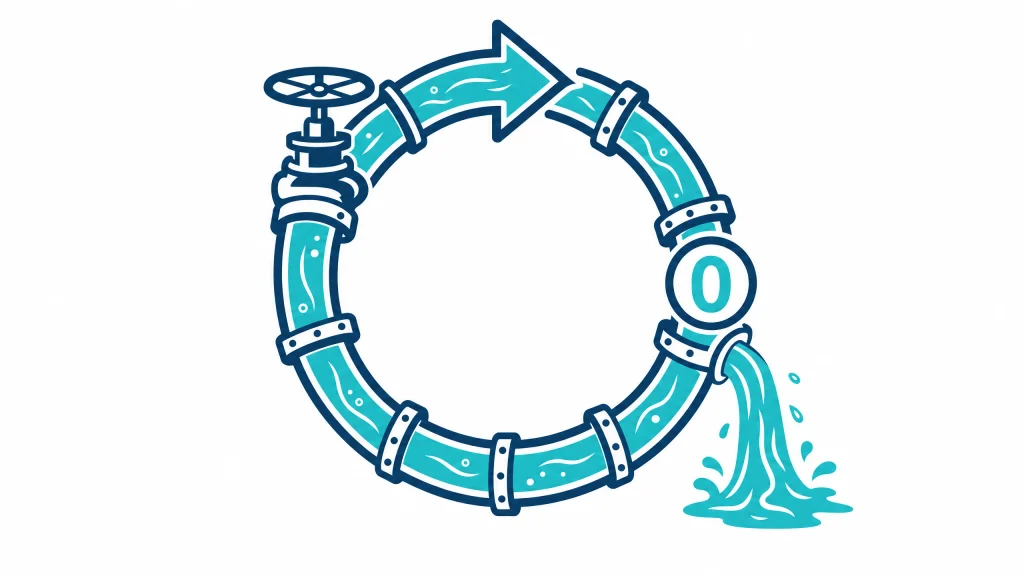
Zero Liquid Discharge has one job: get rid of liquid waste from an industrial facility completely. Not reduce it. Not treat it down to acceptable limits and send it off somewhere. Get rid of it entirely. A regular treatment system still ends with wastewater going out — into a river, a drain, a municipal sewer. A ZLD system doesn’t do that last part. It recovers almost all the water for reuse internally, and whatever’s left over comes out as a solid, not a liquid.
That last part is worth sitting with for a second, because it’s the whole point. Most treatment systems are built to make wastewater acceptable to discharge. ZLD is built so there’s nothing left to discharge in the first place.
It’s also worth being precise about what “zero” actually refers to here, because the term gets used loosely. Zero Liquid Discharge means zero liquid leaving the facility as wastewater — not zero water use in the industrial process itself, and not literally zero waste of any kind. What’s left after a ZLD system finishes its job is a solid residue, not a liquid, and that solid still needs proper disposal or further processing. The “zero” is specific to the discharge, not the entire water cycle of the facility.
How a ZLD Plant Actually Works
A ZLD system isn’t one piece of equipment — it’s a sequence of processes working together, usually in this order:
Pre-treatment. Raw effluent gets screened and pre-treated first, removing suspended solids and adjusting pH, because none of the downstream membrane or evaporation equipment handles raw, unconditioned wastewater well. Skipping or under-designing this stage is one of the more common reasons a ZLD plant underperforms later — membranes foul fast when they’re fed effluent that hasn’t been properly conditioned first.
Membrane filtration. Reverse osmosis or similar membrane technology does the bulk of the water recovery here, concentrating the wastewater and pulling out clean water on the other side. This stage typically recovers the largest single share of reusable water in the whole system, which is why RO membrane selection and maintenance matters so much to overall plant performance.
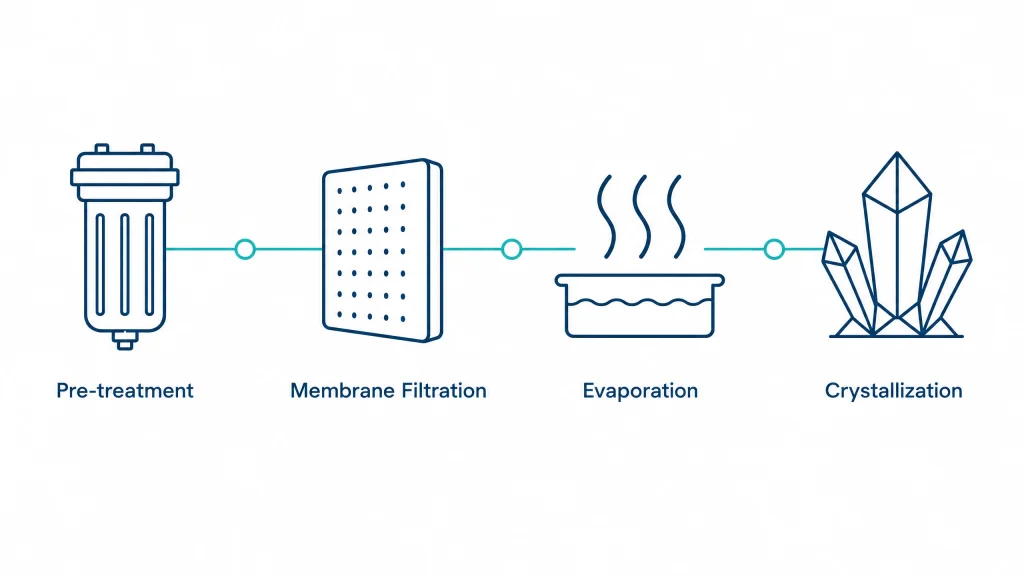
Evaporation. What’s left after membrane filtration is a concentrated brine — still mostly water, just much saltier and denser. Evaporators reduce that further, driving off more water as vapor and leaving an increasingly concentrated liquid behind. This is also the most energy-intensive stage of the whole process, and it’s usually where a large share of a ZLD plant’s running cost actually comes from.
Crystallization. The final stage takes that concentrate and pushes it the rest of the way, crystallizing out the dissolved solids until what remains is a dry, solid cake rather than a liquid at all.
By the end of this sequence, a well-designed zero liquid discharge plant typically recovers up to 95% of the original water for reuse. The solid cake that’s left over gets disposed of safely, or in some cases processed further to recover valuable minerals from it — which occasionally offsets part of the running cost, though this depends heavily on what’s actually in the residue and whether there’s a market for it.
Who Actually Needs This
Not every industrial facility needs ZLD, and it’s worth being honest about that rather than treating it as a universal upgrade everyone should chase.
It tends to become necessary — not optional — for a few specific industries.
Textile manufacturing is probably the most common one in India right now. Dyeing and processing effluent is genuinely difficult to treat conventionally — heavy color load, high TDS, chemical variability from batch to batch — and several states have moved toward mandating ZLD for textile clusters specifically, particularly in regions where local water bodies were already under stress before the mandate came in.
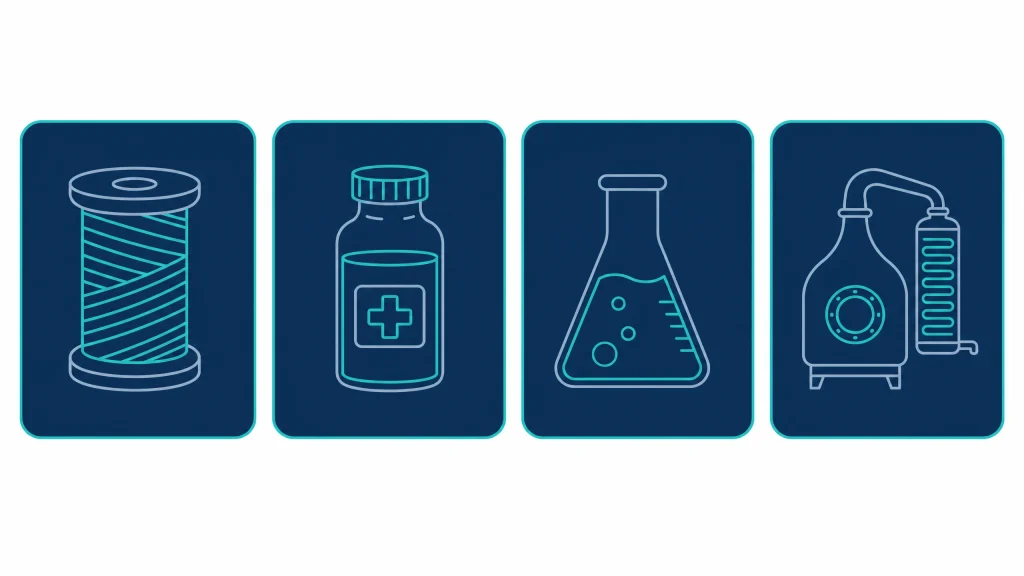
Pharmaceutical manufacturing is another, given how tightly regulated pharma discharge has become. Active pharmaceutical ingredients and their byproducts are difficult to fully remove through conventional treatment, and regulators have increasingly treated pharma effluent as high-risk enough to warrant zero-discharge requirements in several clusters.
Chemical processing plants round out the more common category — anywhere the effluent contains persistent or hazardous compounds that conventional biological treatment can’t reliably break down.
Distilleries and certain heavy industries are the fourth group, mostly wherever the effluent is either too toxic to discharge safely or the local water body simply can’t absorb more of it, regardless of treatment quality.
If your facility falls outside those categories, a properly designed ETP might genuinely be sufficient, and there’s no real benefit to over-building toward ZLD before it’s actually required by your specific state pollution control board or your industry’s discharge norms.
What It Actually Costs (And Why That Number Varies So Much)
This is usually the question that comes up right after “what is it,” and it’s a fair one — ZLD systems aren’t cheap, and anyone telling you a fixed number without knowing your effluent characteristics is guessing.
Cost depends heavily on a few things: the volume of effluent you’re processing daily, how concentrated and difficult the wastewater is to begin with, and which combination of membrane, evaporation, and crystallization technology the site actually needs. A smaller facility with relatively clean effluent and modest daily volume will need a very different system — and a very different budget — than a large textile unit running high-TDS wastewater around the clock.
There are really two cost categories worth separating out, since they get conflated a lot in early conversations:
Capital cost — the upfront cost of designing, building, and installing the plant itself. This scales mostly with capacity (how many kilolitres or litres per day the system needs to handle) and with how difficult the effluent is to treat, since more difficult effluent generally needs more pre-treatment and more robust membrane systems upstream.
Operating cost — the ongoing cost of actually running the plant, which is dominated by energy consumption. Evaporation and crystallization are thermally intensive processes, so a facility’s power costs and the efficiency of the evaporation technology chosen have a much bigger long-term impact on total cost of ownership than most people expect going in.
The honest answer is that ZLD is a genuine capital investment, both to install and to run. Where it makes sense, it’s less a discretionary upgrade and more the actual cost of continuing to operate under current regulations — which is a different calculation than a typical equipment purchase, and worth framing that way internally when building a business case for it.
ZLD vs. a Standard ETP — What’s the Real Difference
An Effluent Treatment Plant treats wastewater enough to meet discharge norms, then sends the treated water out — to a drain, a river, a municipal system. A ZLD system doesn’t send treated water anywhere outside the facility at all. It keeps recycling and concentrating it until there’s no liquid left to send.
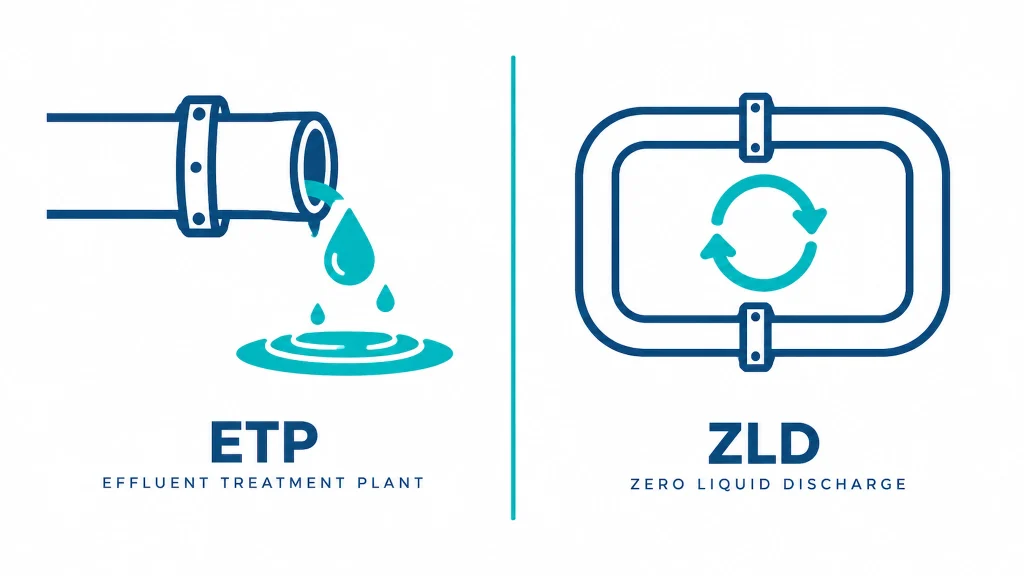
That difference matters more than it might sound like on paper. An ETP is generally cheaper to install and run, and for facilities under moderate discharge norms, it’s often genuinely sufficient — most industries in India still operate under standard ETP compliance, not ZLD. ZLD is a bigger commitment — but it’s also the only real option once regulations move to zero-discharge requirements, or once a facility simply can’t get an NOC to discharge into the local water system anymore.
There’s a middle ground worth mentioning too: some facilities run an ETP as pre-treatment feeding into a smaller ZLD system, rather than sizing the ZLD system to handle raw effluent directly. This can reduce the overall capital and energy cost, since the ZLD stage only has to handle a smaller, already-treated volume rather than the full raw effluent load.
The Regulatory Push Behind ZLD in India
Two things drive ZLD mandates in India. The CPCB sets central guidelines. Then each State Pollution Control Board enforces its own version on top of that — and state rules can end up stricter than the central baseline, depending on how much water stress the region’s already under. Tamil Nadu and Gujarat got hit early. Both states have heavy textile industries and not much freshwater to spare, so the math there was never going to work long-term without ZLD.
Facilities rarely see this show up as its own standalone regulation. It’s usually tucked into something else — a condition on your Consent to Operate renewal, or a requirement attached to environmental clearance for a new unit or an expansion. That’s part of why it often catches facilities off guard — it arrives bundled into a compliance process they were already going through for other reasons, with a timeline that doesn’t leave much room to design and install a ZLD system from scratch.
Common Mistakes That Undermine a ZLD System
A handful of issues come up repeatedly across poorly performing ZLD installations, and most of them trace back to decisions made before the plant was even built.
Undersizing for actual effluent volume. Plants sized around projected volumes that don’t account for seasonal variation, production ramp-ups, or future expansion tend to run at or past capacity within a couple of years, forcing costly retrofits.
Skipping proper effluent characterization. Every industry’s wastewater is different, and even within one industry, effluent composition varies site to site. A system designed around generic assumptions instead of actual lab-tested effluent data tends to underperform from day one — membranes foul faster than expected, or the evaporator can’t handle the actual TDS load.
Underestimating energy cost at the design stage. Since evaporation and crystallization dominate operating cost, choosing energy-inefficient equipment to save on upfront capital often costs significantly more over the plant’s operating life than a slightly higher initial investment in more efficient technology would have.
Treating maintenance as optional. ZLD systems, particularly the membrane stages, need consistent maintenance to keep performing at design capacity. Deferred maintenance is one of the most common reasons a ZLD plant’s actual recovery rate falls well below its rated 90–95%.
Getting ZLD Right From the Start
A zero liquid discharge plant that’s undersized for actual effluent volume, or built around generic assumptions instead of real wastewater characteristics, tends to become a maintenance headache fairly fast — frequent membrane fouling, evaporators running past their intended capacity, energy costs higher than they should be.
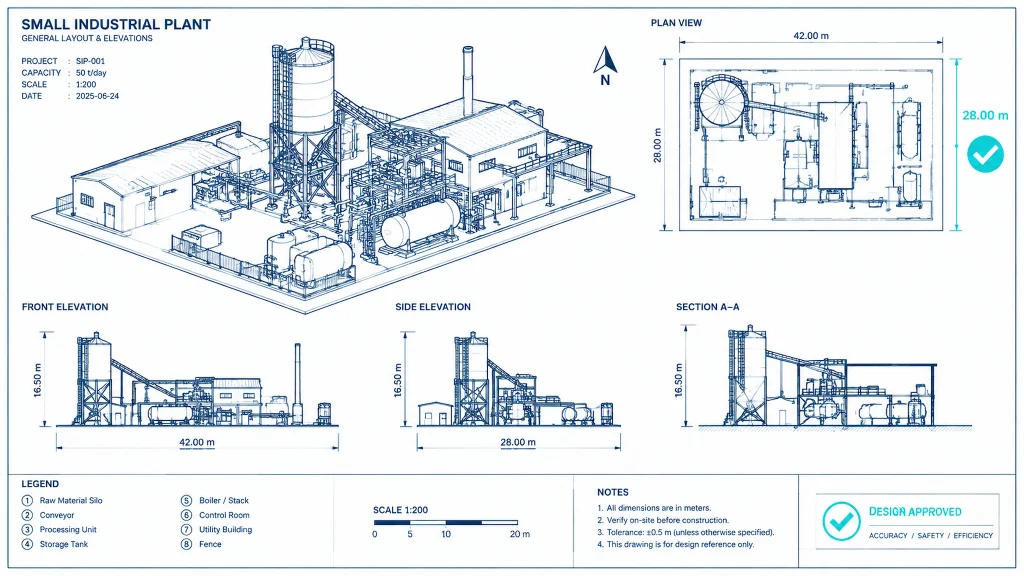
The systems that hold up long-term are the ones designed around the specific effluent a facility actually produces: its volume, its TDS levels, its seasonal variation, not a template pulled from a similar-sounding industry. That’s really the whole argument for working with a manufacturer who builds the system rather than resells a standardized unit — the design decisions at the start are what determine whether the plant is still running well three years in, not just on commissioning day.
Getting this right starts with testing the actual effluent — before anyone specs a single piece of equipment. Every stage after that gets sized around that real data, not an industry average pulled from somewhere else. And leave some headroom. Designing a plant exactly to today’s volume, with nothing extra, is how you end up rebuilding in three years instead of running as-is.
Frequently Asked Questions
Does Zero Liquid Discharge really mean zero water is used?
No. It means nothing leaves the facility as liquid waste. Water still gets used throughout the industrial process — ZLD just keeps recovering and reusing it internally instead of letting it leave as wastewater.
Is ZLD mandatory for all industries?
No. It’s typically mandated for specific high-risk sectors — textiles, pharmaceuticals, certain chemical industries — or for facilities in water-stressed regions where local regulations require it. Many industries can still operate under standard ETP compliance.
How much water can a ZLD system actually recover?
Most well-designed ZLD systems recover up to 95% of the incoming wastewater for reuse, with the remaining 5% or so reduced to a solid residue rather than discharged as liquid.
What happens to the solid waste from a ZLD plant?
It’s typically disposed of through approved hazardous or non-hazardous waste channels depending on composition, or in some cases processed further to recover minerals or salts with commercial value.
How is a ZLD plant different from a standard ETP?
An ETP treats effluent enough to meet discharge norms, then releases the treated water externally. A ZLD system never releases liquid externally at all — it keeps recovering and concentrating the water internally until only a solid residue remains.
What’s the biggest ongoing cost in running a ZLD plant?
Energy. The evaporation and crystallization stages are thermally intensive, so power consumption typically dominates the operating cost of a ZLD system more than any other single factor.
Can an existing ETP be upgraded into a ZLD system instead of building one from scratch?
Often, yes — an existing ETP can sometimes serve as the pre-treatment stage feeding into an added membrane, evaporation, and crystallization system, which can reduce the overall cost compared to building a completely new ZLD plant from the ground up.