
Effluent Treatment Plant (ETP): What Industries in Navi Mumbai Actually Need to Know
If your factory or processing plant generates wastewater, you’ve probably heard the term effluent treatment plant — usually right around an MPCB inspection or Consent to Operate renewal. Most people nod along without quite knowing what “good enough” looks like for their specific industry.
An effluent treatment plant — ETP for short — treats whatever wastewater your process produces before it goes anywhere else. Sometimes that’s a drain. Sometimes it’s a river, or a sewer line, or straight back into your own process for reuse. Domestic sewage is fairly predictable; industrial effluent just isn’t. A textile dyeing unit’s output and what comes out of an electroplating workshop have almost nothing in common chemically, so no — you can’t design one ETP and copy-paste it across industries.
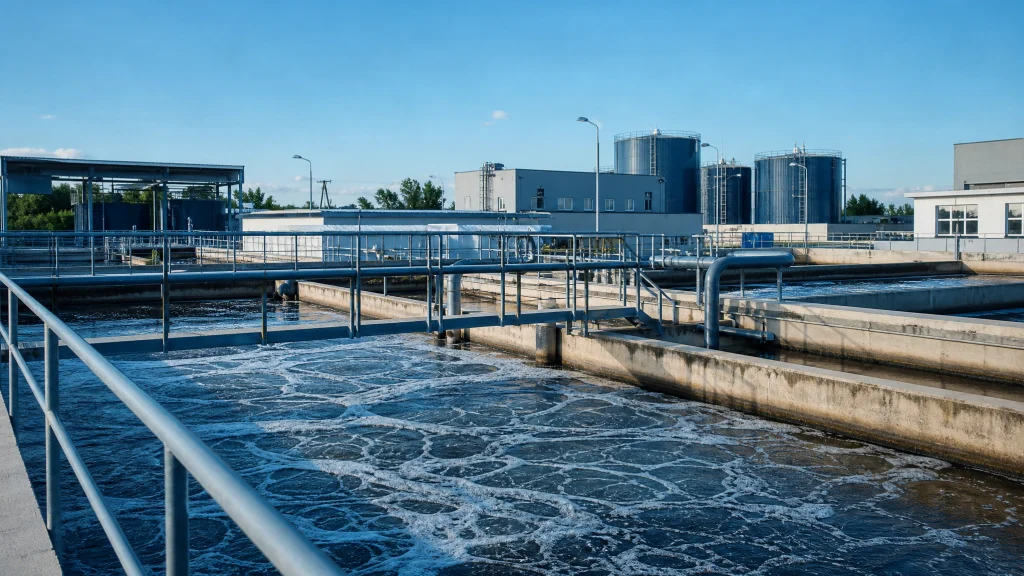
What Is an Effluent Treatment Plant, Really?
On paper, it’s straightforward: strip out the pollutants, the chemicals, whatever suspended solids are floating around, until the water’s clean enough to discharge or reuse. The concept isn’t the hard part. What’s hard is that “industrial wastewater” doesn’t really mean one thing — it changes completely depending on what’s being made upstream of it.
A food processing unit’s effluent is mostly organic — oils, fats, sugars. A pharma plant’s effluent might carry solvents and drug residues. A metal finishing unit’s effluent often carries heavy metals like chromium or nickel, needing entirely different chemistry to neutralize. This is why effluent treatment plant design starts with a wastewater characterization study, not a catalog.
Why This Matters in Navi Mumbai and Thane
Navi Mumbai and the surrounding corridor — Taloja MIDC, Dombivli MIDC, the TTC Industrial Area along Thane-Belapur Road, Rabale — host a dense mix of chemical, pharmaceutical, dye, and engineering units, often close to residential zones. When effluent treatment fails, it doesn’t stay contained to one factory’s boundary wall.
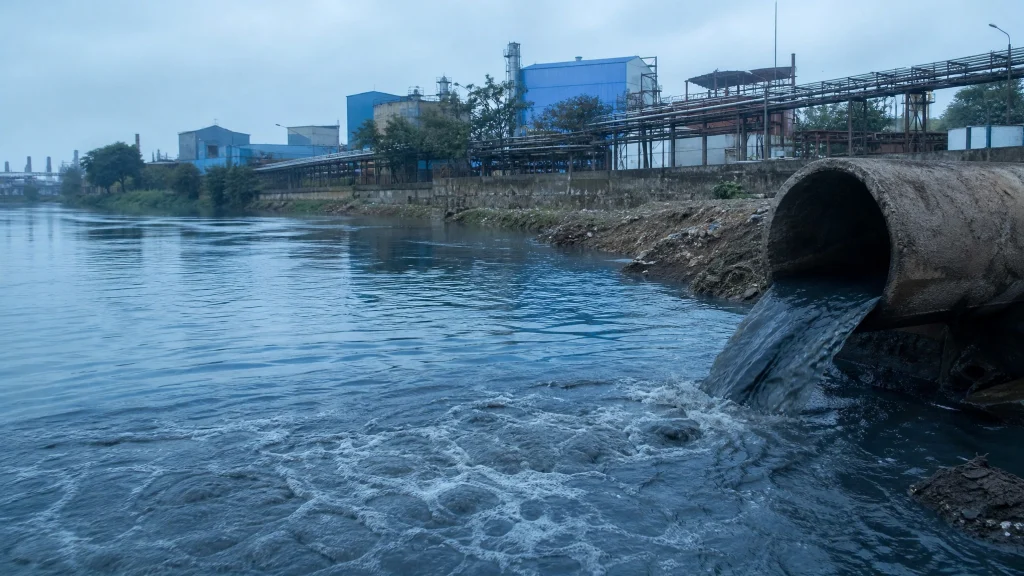
Untreated industrial discharge here has a direct line to the Ulhas River and the creek systems around the Mumbai Metropolitan Region, waterways already stressed by urban sewage. That’s exactly why MPCB monitoring in this belt tends to be stricter than in less industrial parts of the state. For a business here, an ETP is tied directly to your Consent to Establish and Consent to Operate — not optional infrastructure.
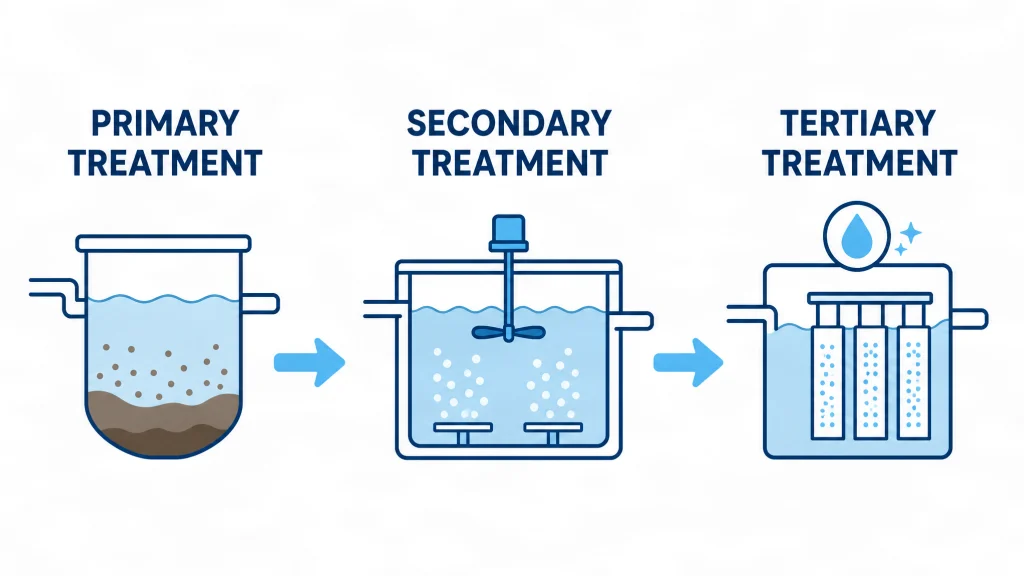
Primary, Secondary, Tertiary — How Effluent Treatment Works
Primary treatment of wastewater handles physical separation — screening removes debris, and equalization tanks buffer the wild swings in flow and pollutant concentration industrial processes tend to produce. Oil/grease separation and pH correction usually happen here too, since industrial effluent often arrives too acidic or alkaline for biological treatment.
Secondary treatment brings in biological processes — bacteria breaking down organic pollutants in an aeration tank — but industrial effluent often needs chemical treatment layered in as well: coagulation-flocculation for suspended solids and metals, sometimes paired with MBBR, SBR, or DAF depending on what’s actually in the water.
Tertiary treatment polishes what’s left — filtration, and where reuse is the goal, sometimes RO — before water is discharged within MPCB norms or brought back into the plant for reuse. If you’re picturing an effluent treatment plant diagram, this is roughly it: screening and equalization, then biological plus chemical treatment, then polishing, with a sludge-handling line running alongside the whole thing.
ETP vs STP: A Quick Distinction
An STP treats domestic sewage, where the pollutant load is fairly consistent no matter the building. An ETP treats industrial effluent, where the load is defined entirely by whatever process generated it — STP design can be somewhat standardized; ETP design has to start from scratch with each industry’s chemistry.
It’s worth a concrete example. A standalone residential society only ever needs an STP — its wastewater is just sewage, full stop. But a mixed-use development with a commercial kitchen, a laundry service, or a small workshop on the ground floor often needs both: an STP for the residential sewage, and a separate ETP for whatever that commercial unit discharges. Mixing the two into one system rarely works, since the biology that handles sewage isn’t built for chemical load, and vice versa.
What Is a Common Effluent Treatment Plant (CETP)?
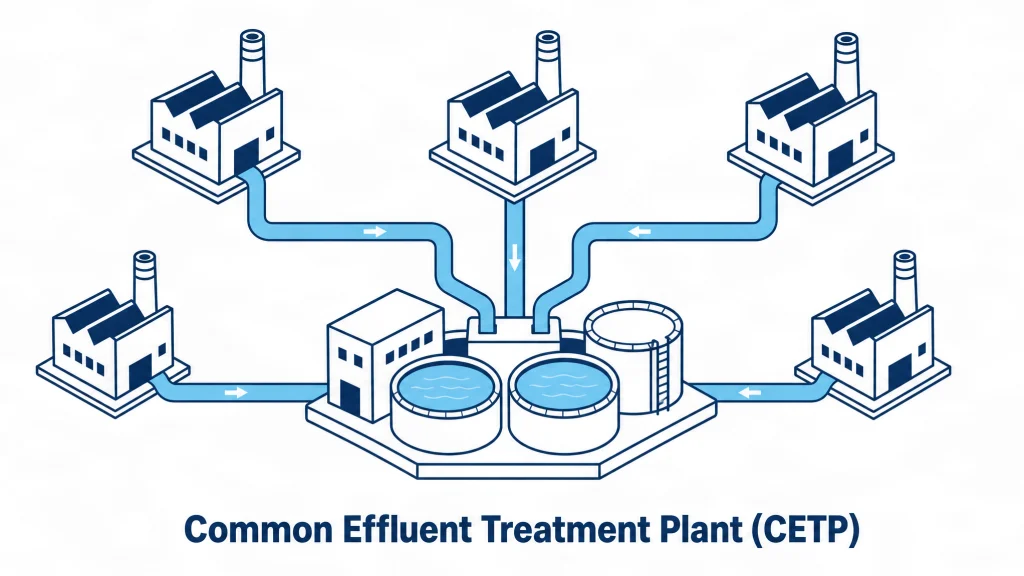
This term comes up often around Maharashtra’s MIDC zones. A common effluent treatment plant is a shared facility — usually set up by an industrial association or MIDC — that treats combined wastewater from multiple smaller units rather than each one building its own standalone ETP. Several estates in the Navi Mumbai-Thane belt run on this model.
A CETP doesn’t remove each unit’s obligation to pre-treat its own effluent to an agreed standard first. A unit dumping untreated chromium-laden wastewater into a CETP designed for organic load can quietly damage the shared biological treatment stage — a common compliance blind spot, since businesses often assume being connected means they’re fully covered.
There’s also a monitoring layer that catches a lot of units off guard. Many industries discharging into a CETP — and increasingly, standalone ETPs too — are required to install an Online Continuous Effluent Monitoring System (OCEMS), which reports discharge quality to MPCB in real time rather than relying on periodic sample tests. It’s not optional paperwork; it’s live data the regulator is already watching, which is exactly why “we’re connected to the CETP” isn’t the same as “we’re compliant.
Who Actually Needs an ETP?
If your operation falls into any of these, effluent treatment isn’t optional: pharmaceutical and chemical manufacturing, textile and dyeing units, food and beverage processing, metal finishing and electroplating, paper and pulp, or any process generating chemically-loaded wastewater. For most of these, an industrial wastewater treatment plant is a precondition for your environmental clearance and ongoing Consent to Operate — not something you retrofit after the fact.
There’s a size question that comes up a lot too — smaller units sometimes assume ETP requirements only kick in at a certain scale, and skip it while they’re “still small.” That’s a risky assumption. MPCB’s consent requirements are based on the nature of your process and pollutant potential, not just your production volume, so a compact electroplating unit can trigger the same effluent treatment plant obligation as a much larger one. Waiting until you’ve “grown into it” usually just means retrofitting under pressure, during an inspection, instead of planning it properly from day one.
It’s also worth knowing this isn’t unique to Maharashtra’s more visible industrial hubs. Even a smaller manufacturing unit operating out of a shed in Dombivli or Kalyan, if its process discharges chemically-loaded effluent, falls under the same requirement as a larger plant in Taloja or the TTC belt. Effluent treatment plant obligations follow the process, not the postal code.
Signs Your Effluent Treatment Plant Needs Attention
Most ETP problems don’t show up as a dramatic failure. They show up quietly, usually months before an MPCB sample test actually catches anything.
Sludge volumes creeping up, needing disposal more often than they used to — that’s usually the first sign something’s off in the biological stage. So is a smell near the plant that wasn’t there before; anaerobic conditions developing where they shouldn’t tend to announce themselves that way. And here’s a common trap: treated water can look perfectly clear and still be out of compliance. Clarity to the eye and actual chemical compliance aren’t the same test, even though it’s tempting to assume they are.
Then there’s the equipment itself. If your ETP plant keeps breaking down, it’s rarely bad luck — more often it means the original design never quite matched your actual effluent load, or maintenance got pushed back one too many times. None of this is expensive to catch early. All of it gets expensive once it turns into a compliance notice or a shutdown.
Choosing the Right Industrial Wastewater Treatment Systems
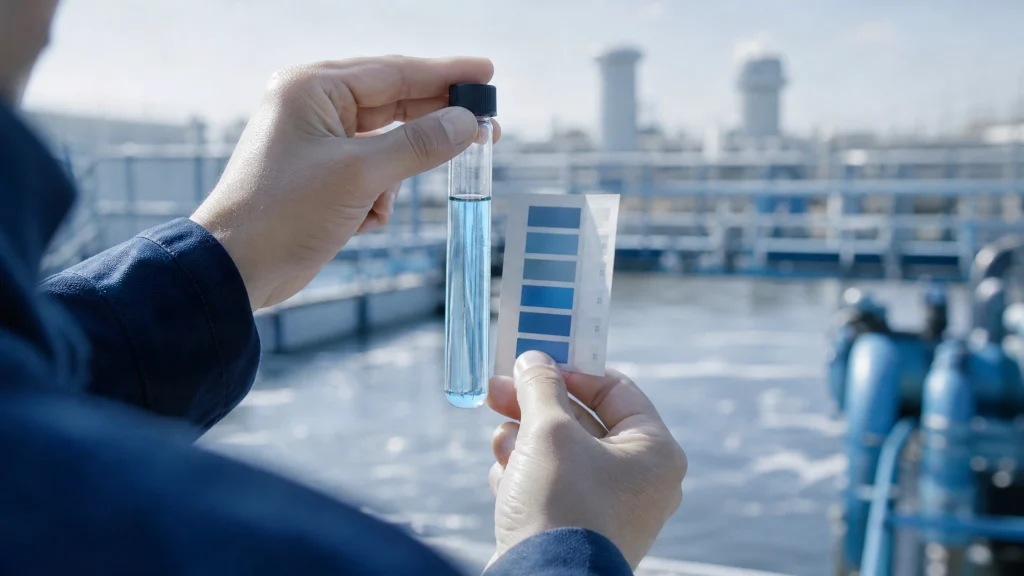
The requirements of a food processing facility and a pharmaceutical unit are entirely different, which means there is no one ideal solution. Common building elements include coagulation-flocculation for suspended solids and metals, DAF for oil-heavy effluent, MBBR and SBR for organic biological load, and RO or evaporation-based systems with zero liquid discharge as the goal. What distinguishes a facility that operates effectively for ten years from one that becomes a maintenance nightmare within two is matching these to your actual effluent characteristics rather than a general industry assumption.
Design and Service — What Good Looks Like
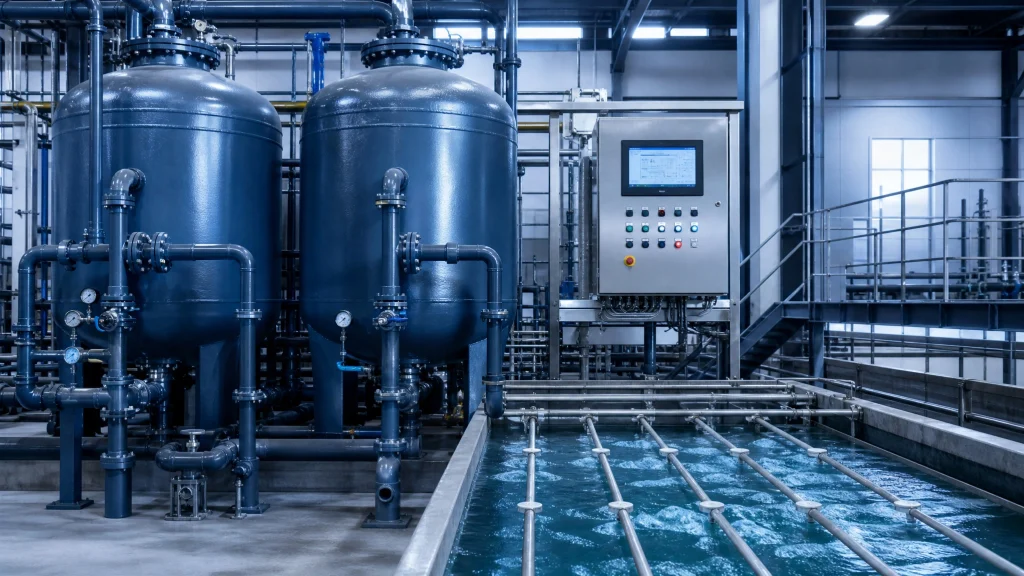
A properly designed ETP starts with lab-tested characterization of your actual effluent, not a template. Sizing, technology, and civil design all trace back to that data — flow rate, pollutant load, discharge target, and site constraints.
It’s not just about design. Many industrial facilities invest in a well-designed plant, treat installation as the last step, and neglect to provide sufficient AMC coverage. Until an MPCB sample test flags it, output quality gradually drops out of compliance.
Choosing an Effluent Treatment Plant Manufacturer
Sales presentations are quickly interrupted by a few questions: Does the company provide a general package that can be used in a variety of industries, or does it perform a wastewater characterisation study specifically for your company? Do they work as a single, responsible team to manage design, manufacture, installation, and Is AMC support genuine, with real response times, rather than merely a phrase in a contract? Do they have firsthand knowledge of the kind of effluent you are dealing with?
Natural Springs Water Solutions is a B2B water and wastewater treatment company based in Navi Mumbai, working across Maharashtra and Pan India. The team designs and delivers STP, ETP, WTP, RO, ZLD, and Rainwater Harvesting systems for industrial and institutional clients — including Lodha, Marriott, Hyatt, and Gleneagles Hospital — with AMC support that continues well past commissioning.
One more thing worth asking: has this vendor actually built for your specific industry before? Get them to prove it, not just show you a slide of client logos. A real, working plant you could call someone about — or drive out and see yourself — is worth more than any pitch deck.
Honestly, you can usually tell within the first few minutes of asking. The ones who’ve genuinely done the work just… answer. No hedging, no pivot to a different question. It’s the vendors who suddenly get vague that tell you something, even if that’s not their intention.
What Does an ETP Cost?
There’s no fixed number — any vendor quoting one without understanding your effluent characteristics is skipping a step. Cost depends on flow rate (KLD), pollutant load and complexity, technology mix, civil work, and whether zero liquid discharge is the target. A pharma unit’s ETP and a food processing unit’s ETP at the same flow rate can carry very different price tags, simply because the chemistry differs.
The Business Case for a Well-Run ETP — Beyond Compliance
Treat an effluent treatment plant as just a compliance cost, and you’re missing half of what it actually does for you.
Take water reuse. A lot of industrial processes can run treated effluent back through cooling towers, floor washing, landscaping — genuinely cutting freshwater intake, which matters in a belt like Navi Mumbai and Thane where water stress is real, not theoretical. That’s money back, not just money spent.
Then weigh that against the alternative. A plant that’s cutting corners eventually forces a shutdown, and production downtime from an MPCB order costs multiples of what routine AMC would have. There’s a quieter reputational piece too — clients and neighbors near your facility notice a well-run plant more than you’d think, even when nobody’s saying it out loud.
Frequently Asked Questions
What is an effluent treatment plant?
It treats industrial wastewater — pulling out chemicals, sediments, and whatever contaminants that specific process leaves behind — before the water gets discharged or reused, in line with MPCB and CPCB norms.
What is the difference between an ETP and an STP?
Mainly what they’re built to handle. ETPs deal with industrial effluent, so what’s in the water depends entirely on the process making it. STPs deal with domestic sewage instead, which barely changes from one building to the next.
What is a Common Effluent Treatment Plant (CETP)?
Yes. A Common Effluent Treatment Plant is shared, usually run within an MIDC estate, treating combined wastewater from several units together. Worth knowing though — being hooked up to a CETP doesn’t let you skip pre-treating your own effluent first.
What are the stages of an effluent treatment plant?
Primary (screening, equalization, oil/grease removal, pH correction), secondary (biological plus chemical treatment), and tertiary (filtration and, where needed, RO for reuse).
Which industries need an industrial wastewater treatment plant?
Pharma, chemical manufacturing, textile and dyeing, food and beverage, metal finishing and electroplating, paper and pulp — basically anything where the process itself generates chemically-loaded wastewater.
Does Natural Springs Water Solutions provide ETP design and service in Navi Mumbai?
Yes — across Navi Mumbai, Thane, the Dombivli-Kalyan belt, and Pan India.
An effluent treatment plant isn’t just a regulatory line item — in a corridor as densely industrial as Navi Mumbai and Thane, it’s what stands between a factory’s daily output and the rivers and groundwater the region depends on. Getting the design right for your specific effluent, and maintaining it well past commissioning, is what actually keeps a plant compliant and a business running.
Looking for an effluent treatment plant manufacturer? Natural Springs Water Solution designs and builds ETP, STP, WTP, RO, ZLD, and Rainwater Harvesting systems across Navi Mumbai, Thane, Dombivli, and Pan India.
Call: +91 9404053576 / +91 9822286573
Email: sales@naturalspringswatersolution.com
Website: https://naturalspringswatersolution.com/)
For official effluent discharge standards, industries can refer to the Maharashtra Pollution Control Board.