
Sewage Treatment Plant: 7 Costly MPCB Compliance Mistakes to Avoid in India
If you’ve ever wondered what actually happens to the water going down your drain, the honest answer is: it goes to a Sewage Treatment Plant. Or at least it’s supposed to. Not the septic-tank kind of “let it sit and settle” treatment — a proper multi-stage process, cleaning the water enough to send back out for flushing, gardening, cooling towers, that sort of thing. Drinking it, though? No. We’ll get to why in a bit.
In Maharashtra, if you’re running a residential society, hotel, hospital, or factory above a certain size, you almost certainly need one. It’s tied directly to MPCB and CPCB compliance, and in most cases, to your Occupancy Certificate.
Interactive 3D model of a Sewage Treatment Plant: drag to rotate, scroll to zoom, click any stage to see what it does.
STP Full Form and Meaning
Let’s start at the beginning, because a surprising percentage of people end up on this page just attempting to figure out what the acronym even means. The full term of STP is Sewage Treatment Plant. It is a treatment plant for residential wastewater that is released or reused.
The STP meaning goes a bit deeper than the full form, though. It’s not just a tank that holds dirty water — it’s active infrastructure. Think of it as the opposite of a passive holding tank. A septic tank mostly just lets solids settle and decompose naturally over time. A Sewage Treatment Plant does something more deliberate: it combines physical filtration, biological treatment, and disinfection to actively bring pollution levels down to a point regulators consider safe.
The two numbers that matter most here are BOD (Biochemical Oxygen Demand) and COD (Chemical Oxygen Demand) — essentially measures of how much oxygen-consuming organic pollution is in the water. Lower is better. The entire job of a Sewage Treatment Plant is pulling those numbers down before the water leaves the plant.
For any project generating sewage — and pretty much every residential or commercial building does — a Sewage Treatment Plant isn’t a nice-to-have. It’s baked into how you get approved to occupy the building in the first place.
Why This Matters More in a City Like Mumbai
Here’s the thing about water scarcity in India: it’s not really about there being too little water in the ground, at least not everywhere. It’s about how fast demand is outpacing supply in specific places, and Mumbai’s satellite cities are a textbook example. Navi Mumbai, Thane, Kalyan, Dombivli — these areas are growing faster than their water infrastructure can comfortably keep up with.
A few things are happening at once. Groundwater tables are dropping, according to Central Ground Water Board monitoring data, because borewells are pulling out more than gets replenished. Tanker dependency spikes every year before the monsoon arrives. And when sewage isn’t treated properly, it doesn’t just disappear — it ends up in local water bodies like the Ulhas River, or in the creeks around the Mumbai Metropolitan Region.
A properly designed Sewage Treatment Plant doesn’t just keep you out of trouble with inspectors. It genuinely reduces how much fresh water a building needs to pull in, because treated water can go right back into gardening or flushing instead. Pair that with rainwater harvesting and you’ve got a building that’s putting far less strain on the water table than it otherwise would.
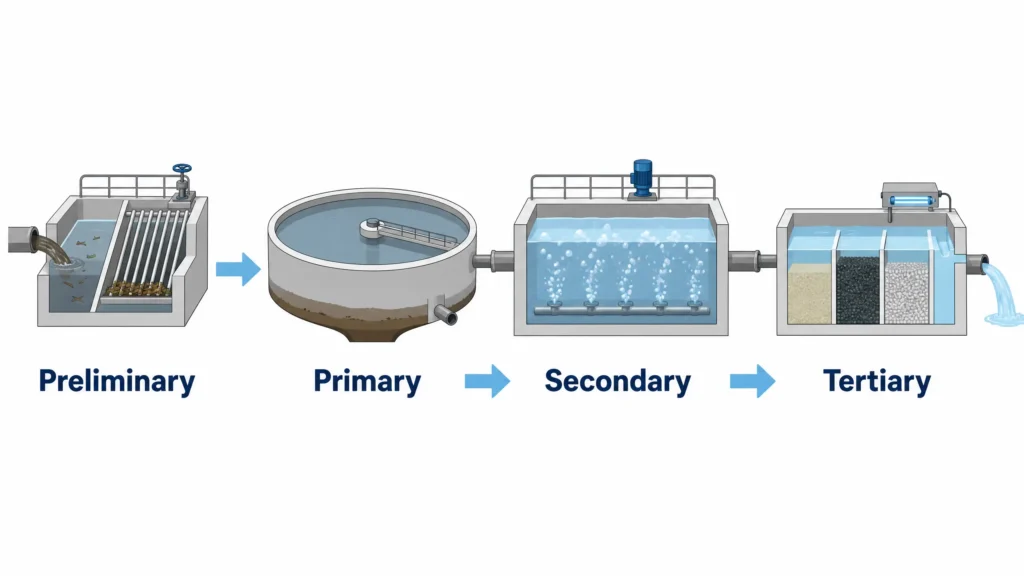
The Four Stages of a Sewage Treatment Plant, Explained Properly
Every Sewage Treatment Plant, whatever technology it uses, follows the same basic sequence. The technology changes — MBBR, SBR, MBR, or older conventional systems — but the four-stage logic underneath stays constant.
Preliminary treatment comes first, and it’s fairly unglamorous: screens and grit chambers catch the big stuff — plastic, cloth, sanitary waste, sand, grit — before it can damage pumps or clog anything further down the line.
Next is primary treatment. The water slows down in a settling tank, or primary clarifier, long enough for suspended solids to sink to the bottom as sludge. A lot of what’s visibly dirty about the water gets removed right here, before any biological work even starts.
Then comes the part that actually does most of the heavy lifting: secondary, or biological, treatment. Inside an aeration tank, bacteria — either naturally occurring or specifically cultivated — break down the organic matter still dissolved in the water. Oxygen gets pumped in continuously to keep those bacteria alive and working. This is where BOD and COD levels drop the most, and honestly, it’s the stage that determines whether a Sewage Treatment Plant is actually doing its job well or just going through the motions.
A few technologies show up repeatedly at this stage:
- MBBR (Moving Bed Biofilm Reactor) — bacteria grow on floating media inside the tank, which packs a lot of treatment capacity into a relatively small footprint.
- SBR (Sequential Batch Reactor) — everything happens in timed batches within one tank, which works well when flow is inconsistent or the site is smaller.
- MBR (Membrane Bioreactor) — pairs biological treatment with membrane filtration, producing noticeably higher-quality output, often used where the treated water needs to meet a stricter reuse standard.
Finally, tertiary treatment polishes what’s left — filtration plus disinfection, usually chlorination or UV — to knock out remaining pathogens before the water is either discharged or reused.
Can You Drink Sewage Treatment Plant Water?
No. And this is worth being direct about, because it’s the single most common misunderstanding people have about sewage treatment. Water coming out of a Sewage Treatment Plant is genuinely safe for flushing, gardening, cooling towers, and groundwater recharge. It is not treated to drinking water standards, and getting it there would require an entirely separate process — typically Reverse Osmosis paired with disinfection.
This matters especially in residential societies, where “treated” sometimes gets quietly translated in people’s heads to “drinkable.” It isn’t, and no Sewage Treatment Plant is designed to make it so.
Sewage Treatment Plant vs ETP vs WTP — Untangling the Acronyms
These three get mixed up constantly, and it’s worth being clear about what separates them.
| Variable | STP | ETP | WTP |
|---|---|---|---|
| Treats | Domestic/municipal sewage | Industrial effluent | Raw water (river, borewell, municipal supply) |
| Comes from | Homes, institutions, hotels | Factories, manufacturing units | Natural or municipal sources |
| Job | Make wastewater safe to discharge or reuse | Remove industrial contaminants before discharge | Make raw water safe to use in the first place |
| Used by | Societies, hospitals, hotels | Factories, chemical plants, pharma units | Municipalities, industries, gated communities |
If you want the short version: a Sewage Treatment Plant and an ETP both clean up water that’s already been used, so it can go back out safely. A WTP does the opposite — it takes water from a source and makes it usable to begin with. ETPs also tend to be far more custom-built than Sewage Treatment Plants, simply because industrial effluent varies wildly depending on what the factory is actually producing, whereas domestic sewage is fairly predictable no matter whose building it comes from.
MPCB Sewage Treatment Plant Compliance: Who Actually Needs One
In Maharashtra — and in most Indian states, honestly — MPCB STP compliance is close to mandatory for:
- Residential societies and townships past a certain size, as defined by local municipal norms and MPCB
- Hotels, where continuous guest occupancy means continuous sewage generation
- Hospitals, which have to handle both domestic and biomedical wastewater carefully
- Factories, often alongside an ETP if there’s industrial effluent in the mix too
- Commercial complexes and IT parks with heavy daily footfall
For projects across Navi Mumbai, Thane, Kalyan-Dombivli, and greater Mumbai specifically, this usually isn’t optional in practice — Sewage Treatment Plant installation gets tied to environmental clearance and your final Occupancy Certificate. Skip it, and the building often can’t legally be occupied. Inspectors don’t just check that a plant exists, either — they check that it’s actually performing against CPCB discharge norms, which is where a lot of societies get caught out months after installation.
Sewage Treatment Plant Cost in India: What Actually Drives the Number
There isn’t a single number here, and anyone who quotes you a flat STP cost in India without knowing your site is probably guessing. The total swings on a handful of factors:
Capacity is the big one — measured in KLD or MLD — and a 10 KLD plant for a small society costs nothing like a 500 KLD plant for a large township. The technology matters too; MBBR, SBR, and MBR all come with different capital and running costs. Site conditions play a role — available space, soil type, whether the plant has to go underground because there’s no room above ground. And civil work — tanks, piping, electrical — adds up fast.
Given how much these variables shift the total, a site-specific consultation is really the only way to get an STP cost in India that’s worth trusting. A Sewage Treatment Plant that’s undersized or poorly matched to the site tends to cost more in the long run anyway, through inefficiency or repeated compliance headaches.
Installing It Is the Easy Part
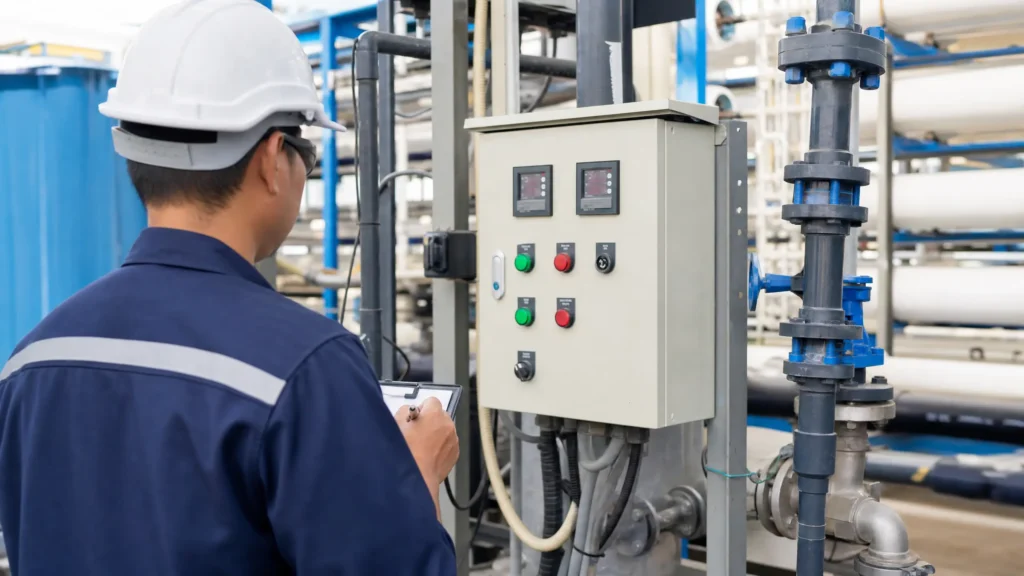
Here’s a mistake we see often: treating installation as the finish line. It isn’t. A Sewage Treatment Plant that doesn’t get maintained properly starts sliding backward almost immediately — biological media degrades, membranes wear down, and without regular monitoring, breakdowns become a when-not-if situation. Inconsistent output also tends to show up right when an MPCB inspection happens, which is its own headache.
A proper Annual Maintenance Contract covers regular visits, real-time monitoring, and breakdown support when something does go wrong. It’s really about protecting whatever you spent on the plant itself — not just for the first year, but for the full stretch of years it’s supposed to run.
Picking the Right Sewage Treatment Plant Manufacturer in Mumbai
If you’re evaluating an STP manufacturer in Mumbai — or anywhere across Navi Mumbai, Thane, or the Kalyan-Dombivli belt — a few questions cut through the sales pitch pretty quickly. Does the company actually design around your site’s flow and space, or are they pushing a generic package? Do they handle everything — design, manufacturing, installation, AMC — or just drop off equipment and leave? Have they built for your specific project type before, since a hotel’s load pattern looks nothing like a factory’s? And realistically, how fast can their team show up if something breaks at 11pm?
Natural Springs Water Solutions is based out of Navi Mumbai, with project and AMC coverage across Maharashtra and Pan India. As an established STP manufacturer in Mumbai and the surrounding belt, the team has designed and built Sewage Treatment Plant, ETP, WTP, RO, ZLD, and Rainwater Harvesting systems for clients including Lodha, Marriott, Hyatt, and Gleneagles Hospital — across residential, hospitality, healthcare, and industrial sites — with AMC support that continues well past installation day.
Frequently Asked Questions
What is a Sewage Treatment Plant (STP)? A facility that treats domestic or municipal wastewater to remove solids, organic matter, and pathogens, so the treated water can be safely discharged, reused for flushing and gardening, or recharged into groundwater.
What is the STP full form? STP stands for Sewage Treatment Plant — a system designed to clean domestic and municipal wastewater before it’s discharged or reused.
What are the 4 stages of a sewage treatment plant? Preliminary (removes debris and grit), primary (settles suspended solids), secondary (bacteria break down organic matter biologically), and tertiary (filters and disinfects for safe reuse or discharge).
Is STP-treated water safe to drink? No. It’s safe for flushing, gardening, cooling towers, and groundwater recharge — not for drinking, which needs additional treatment like RO combined with disinfection.
What’s the difference between STP and ETP? STP handles domestic and municipal sewage from homes and institutions. ETP handles industrial effluent, which varies a lot depending on the specific manufacturing process producing it.
How do microorganisms help inside a Sewage Treatment Plant? They consume organic pollutants during secondary treatment, breaking them down into carbon dioxide, water, and biomass — this is what actually pulls BOD and COD levels down.
What is the STP cost in India? It depends on capacity (KLD/MLD), the treatment technology chosen (MBBR, SBR, MBR), site conditions, and civil work — there’s no fixed price without a site-specific quote.
Is a Sewage Treatment Plant mandatory for societies in Maharashtra? Yes, in most cases — MPCB STP compliance requires societies above a certain size to install one before they can get environmental clearance and Occupancy Certificate approval from local municipal authorities.
Does Natural Springs Water Solutions work outside Mumbai? Yes. The hub is in Navi Mumbai, but the company serves clients Pan India, with strong coverage across Thane, Kalyan-Dombivli, and Mumbai specifically.
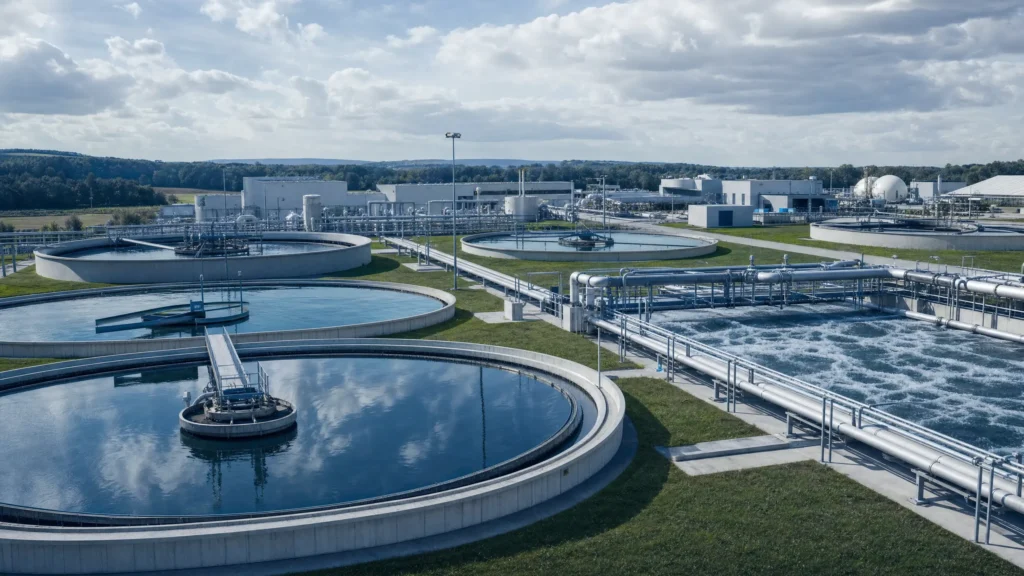
A Sewage Treatment Plant isn’t really a box to tick for approval paperwork, even though that’s often how it gets treated. In a city expanding as fast as Mumbai and its surrounding belt, it’s closer to core infrastructure — it decides whether the water a building already has gets wasted or put to use again. Knowing how the four stages work, what the treated water is and isn’t good for, what actually drives STP cost in India, and why MPCB STP compliance matters as much as the initial install, makes for better decisions whether you’re running a society, a hotel, a hospital, or a factory floor.
Looking for a reliable STP manufacturer in Mumbai for your project? Natural Springs Water Solutions builds end-to-end Sewage Treatment Plant, ETP, WTP, RO, ZLD, and Rainwater Harvesting systems across Mumbai, Navi Mumbai, Thane, Dombivli, and Pan India.
Call Now: +91 9404053576 / +91 9822286573
Email: sales@naturalspringswatersolution.com
Website naturalspringswatersolution.com